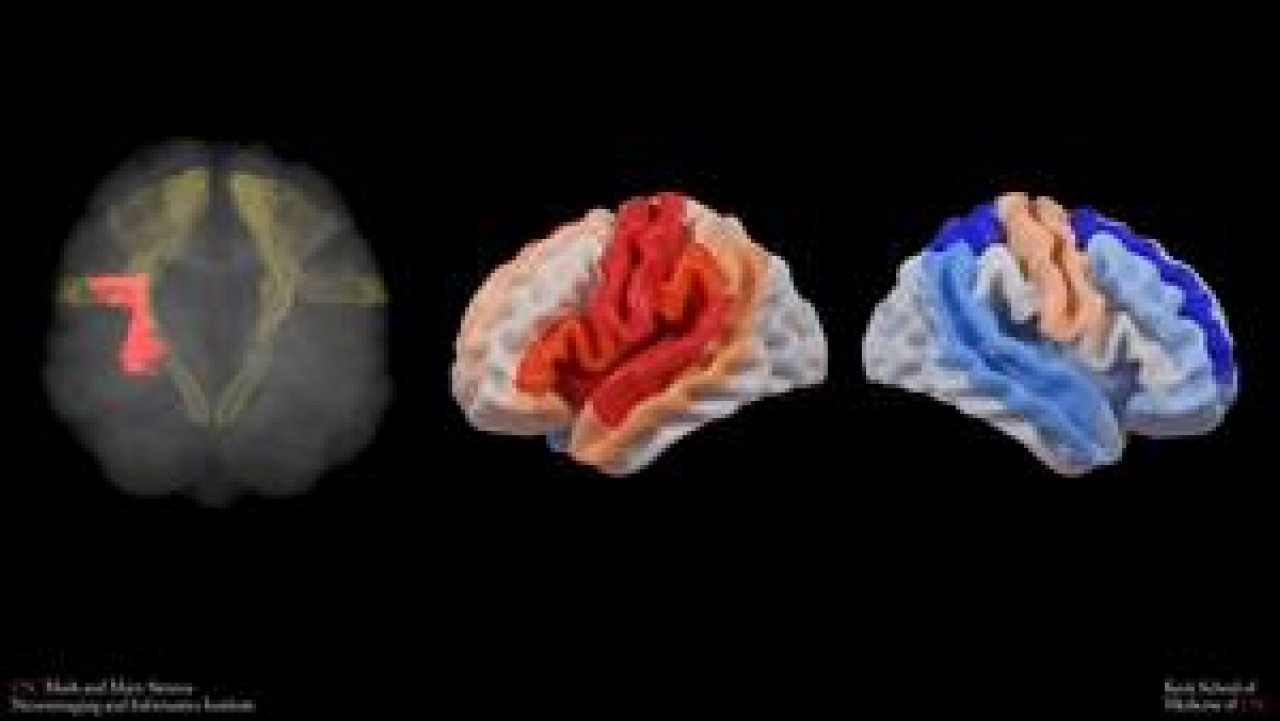
Researchers at the USC Mark and Mary Stevens Neuroimaging and Informatics Institute, working with the ENIGMA Stroke Recovery Working Group, report in The Lancet Digital Health (22 Jan 2026) that deep-learning estimates of regional brain age reveal a paradox: larger strokes accelerate aging in the damaged hemisphere but make undamaged regions on the opposite side appear younger. The pattern was strongest in people with severe, persistent motor impairment.
Data and brain-age modelling
The team pooled MRI scans and clinical data from more than 500 stroke survivors collected at 34 sites in eight countries. They used a graph convolutional neural network to predict the biological age of 18 brain regions. The difference between predicted brain age and chronological age (brain-predicted age difference, or brain-PAD) served as a marker of regional neural health.
Contralesional patterns and motor scores
When researchers matched regional brain-PAD to motor scores, they found that people with larger strokes and ongoing movement deficits—often more than six months after rehabilitation—showed younger-than-expected brain age in contralesional regions, especially the frontoparietal network. "This pattern suggests the brain may be reorganizing itself, essentially rejuvenating undamaged networks to compensate for lost function," said Hosung Kim, PhD, co-senior author.
Kim and colleagues caution that a "younger" regional brain age does not mean full functional recovery. The team interprets the signal as a form of contralesional neuroplasticity that may reflect adaptive attempts to support motor planning and coordination when the damaged motor system cannot fully recover.
Funding and follow-up
The study was conducted within ENIGMA’s multicohort framework and funded in part by NIH grant R01 NS115845. Arthur Toga, director of USC’s Stevens INI, said the group will pursue longitudinal work to track how these regional brain-age patterns evolve from acute injury to the chronic phase, with the goal of informing more personalized rehabilitation strategies. More on the ENIGMA Stroke Recovery Working Group: enigma.ini.usc.edu.
Image: EurekAlert! / study materials.
Tags: stroke, neuroplasticity, brain age, MRI, deep learning
Topics: Neuroscience & neuroplasticity