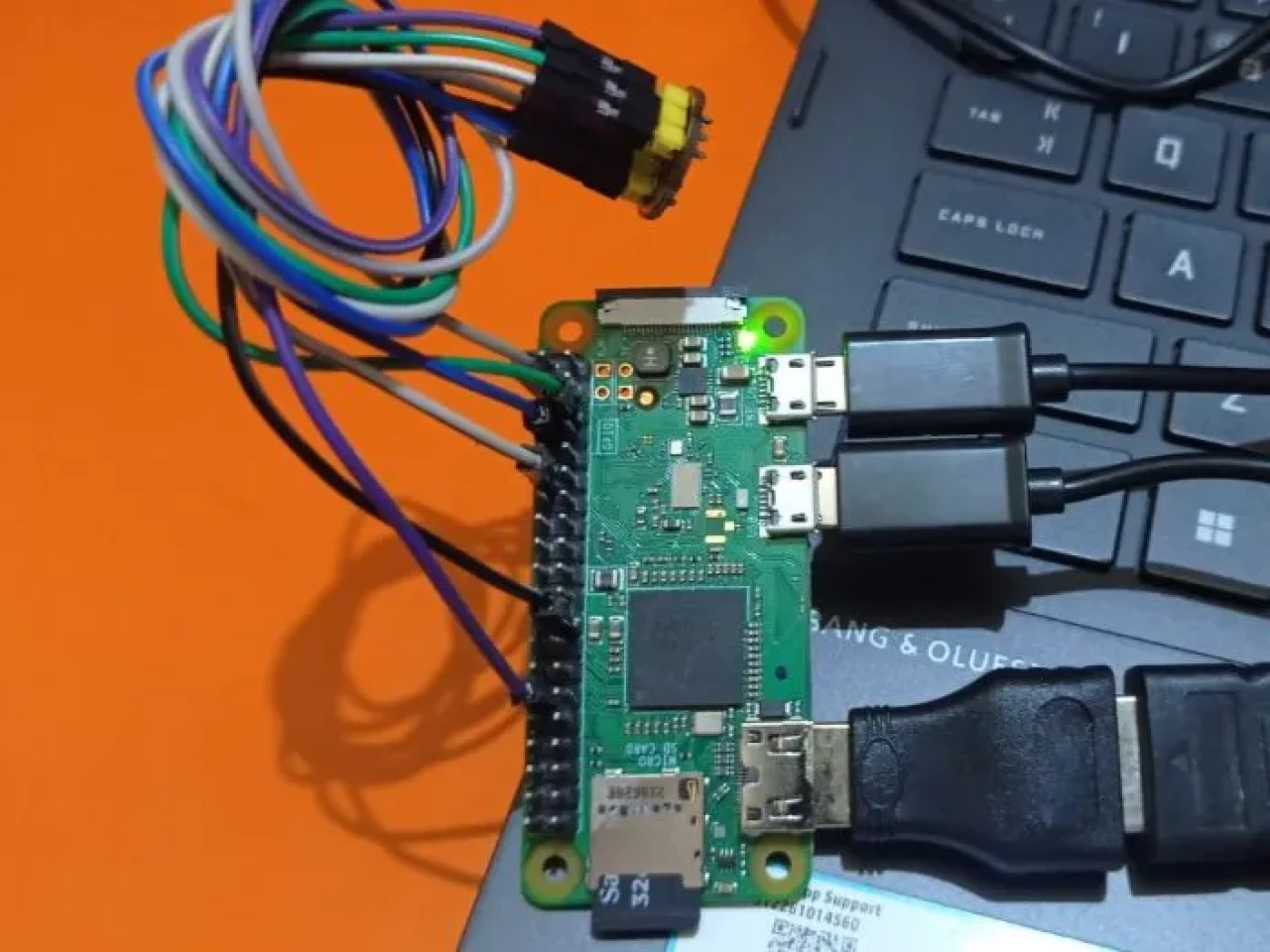
Developers of Tab, an AI wearable that records and indexes personal interactions, say the project's web app and backend are functional but the Raspberry Pi Zero W hardware prototype failed to connect to Wi‑Fi. The team published code and a status write-up at the project repo.
The software stack includes a Next.js front end, Supabase as the Postgres backend with pgvector for vector search, and cloud functions that run a "process-audio" routine. That routine uses OpenAI's Whisper Large V3 for transcription and the repo lists sentence-transformers/all-MiniLM-L6-v2 or OpenAI embeddings for vector encoding. The chat handler in the backend fetches relevant records from Supabase to provide context-aware responses.
Because the hardware failed to upload recordings, the team used a local Python recorder to test the pipeline. Recorded audio transcribed with Whisper produced transcripts that were stored in Supabase, and the chat UI returned fast, context-aware replies in those desk-based tests. The project write-up includes sample interactions demonstrating query-based recall of recorded conversations.
Hardware work centered on a Raspberry Pi Zero W audio rig. The team reported boot errors (a seven-blink pattern that they interpreted as an OS-image mismatch) and persistent Wi‑Fi connectivity problems. Those issues prevented the prototype from reliably sending recordings to the cloud. As a workaround the developers ran recordings locally and pushed transcripts to Supabase for testing.
The repo and document list planned improvements: compacting the device, adding a speaker for spoken replies, and a camera for multimodal context capture. The team says hardware problems remain the primary blocker; software components are available for others to inspect or build on via the GitHub link.
Photo credit: hackster.imgix.net
Tags: wearable AI, voice transcription, Supabase, Raspberry Pi, personal assistant
Topics: Neurotech industry & startups, Wearable neurotech, Stress, focus & mental clarity