Researchers led by Renxiu Bian et al. published a secondary head-to-head analysis in PLOS One (24 April 2026) comparing low‑intensity focused ultrasound (LIFU) and high‑frequency repetitive transcranial magnetic stimulation (rTMS) for motor recovery after subacute stroke.
The analysis used data from a prospectively registered randomized trial of 50 patients (25 LIFU, 25 rTMS) who received two weeks of standard rehabilitation plus neuromodulation. LIFU was delivered at 0.5 MHz (ISPPA 10.2 W/cm² free-field), 20 minutes per session, five days per week (10 sessions). rTMS was 10 Hz at 80% resting motor threshold, 1,000 pulses per session, 20 minutes per session, same schedule.
Both groups improved on the Fugl–Meyer Assessment (FMA) and the Modified Barthel Index (MBI) after the intervention. Post‑intervention endpoint comparisons did not show statistically significant differences between groups. However, change‑from‑baseline (ΔFMA) analyses favored LIFU. Median upper‑limb ΔFMA was 7 (IQR 3–10.5) with LIFU versus 2 (1–3) with rTMS (p = 0.001). Median lower‑limb ΔFMA was 3 (1–4.5) versus 1 (0–1.5) (p < 0.05).
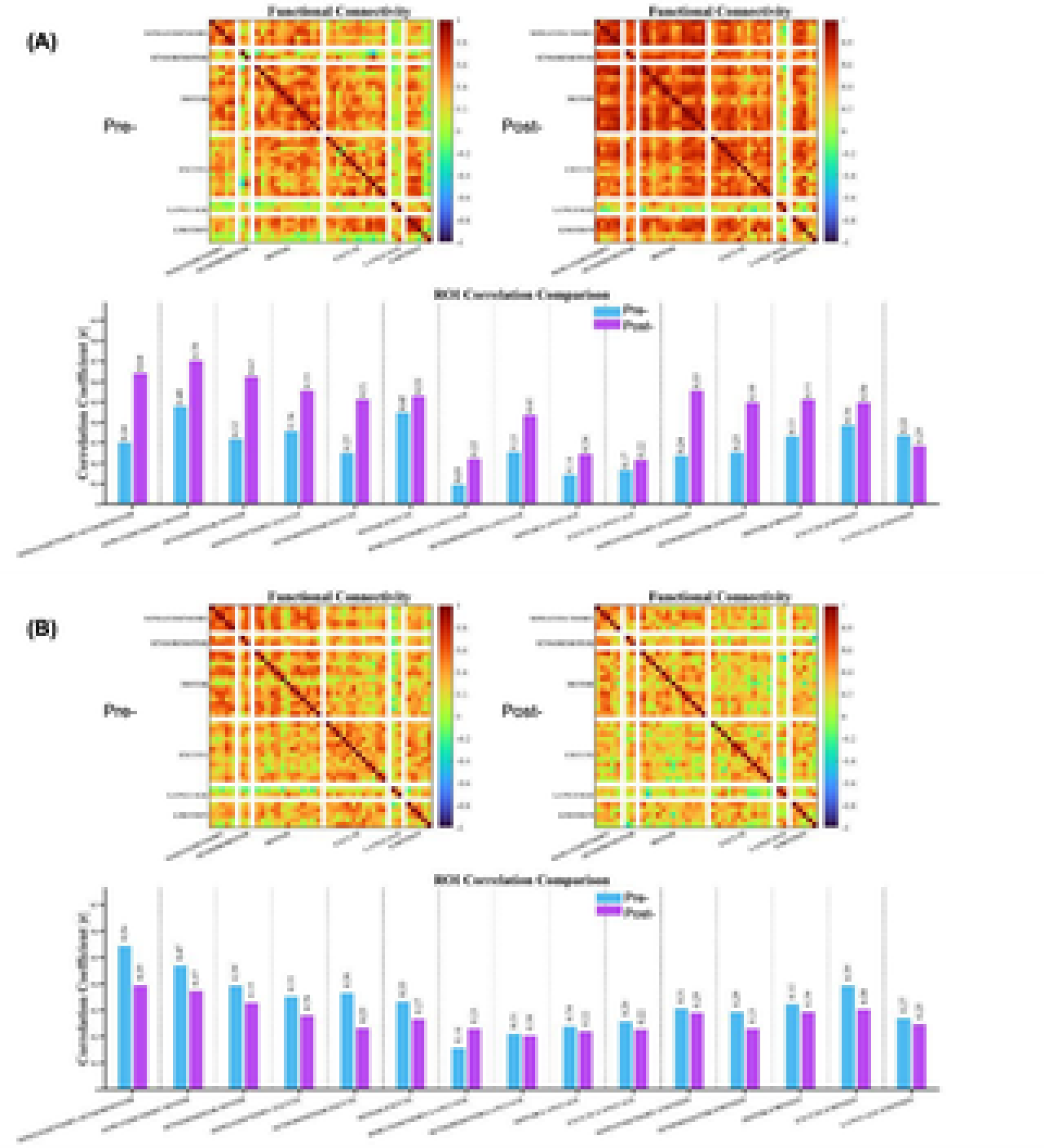
Resting‑state functional near‑infrared spectroscopy (fNIRS) in completers (LIFU n = 21; rTMS n = 22) showed a significant increase in prefrontal fractional ALFF after LIFU (p = 0.002). Between‑group comparison found greater change in motor‑related cortical fALFF with LIFU (t = 2.44, p = 0.019). Functional connectivity trends differed by modality but no connectivity changes survived correction for multiple comparisons.
No stimulation‑related adverse events or treatment interruptions were reported in either group.
The authors note this is a secondary, not independently powered, head‑to‑head comparison with a modest sample and a short intervention window. They caution that ΔFMA advantages for LIFU did not translate into significant endpoint differences and that fNIRS is limited to superficial cortical signals. The paper lists the DOI: 10.1371/journal.pone.0348030.
Conclusion: In this small randomized sample, LIFU and rTMS produced comparable short‑term clinical gains when added to rehabilitation, while LIFU showed larger change‑from‑baseline motor gains and modality‑specific resting‑state activity changes. The authors call for larger, longer trials to test whether these early neural differences predict durable functional benefits.
Photo credit: journals.plos.org
Tags: low-intensity focused ultrasound, repetitive transcranial magnetic stimulation, stroke rehabilitation, fNIRS, Fugl–Meyer Assessment
Topics: Non-invasive brain stimulation, Neuromodulation, Neuroscience & neuroplasticity