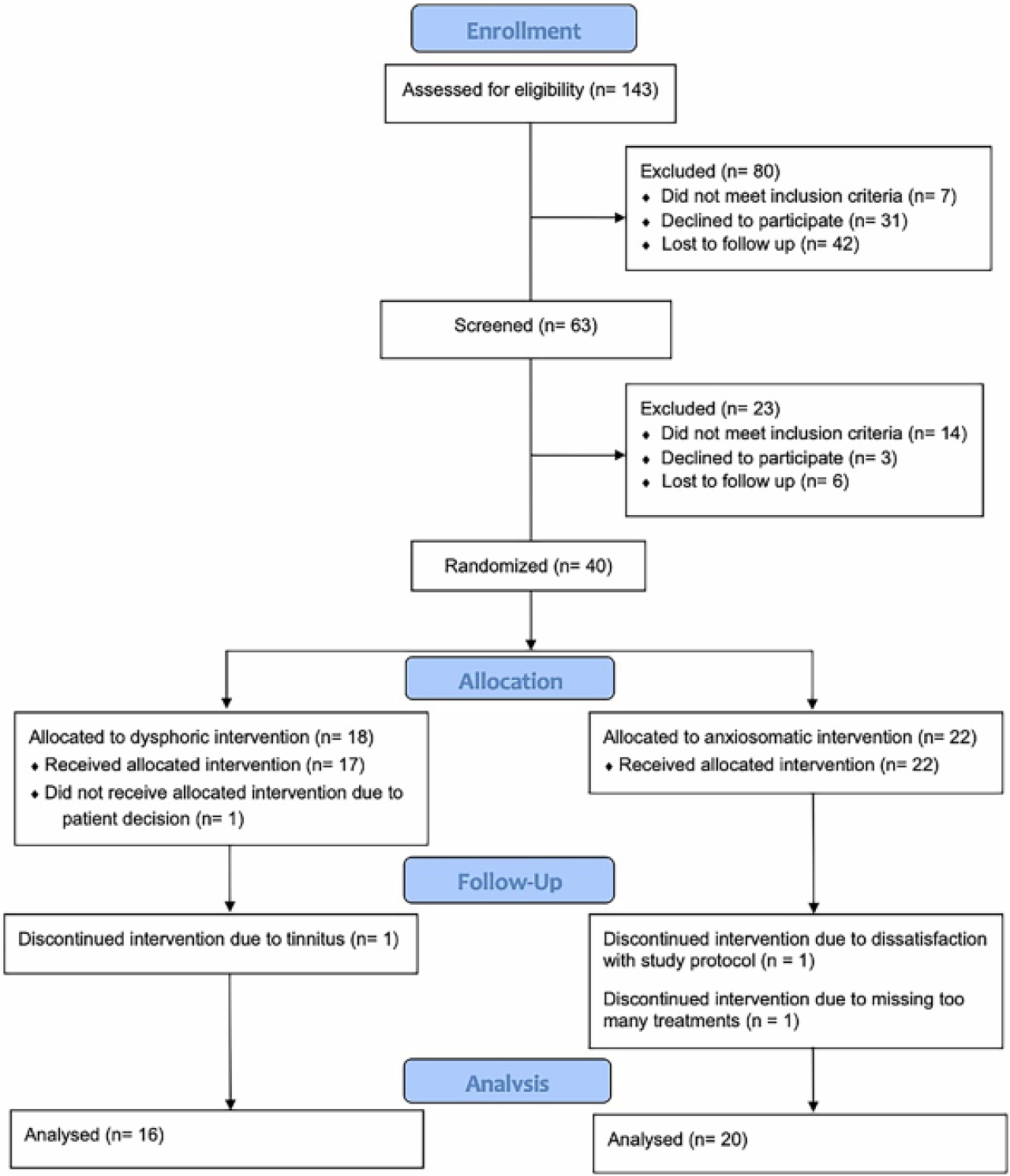
Researchers at Mass General Brigham randomized adults with major depressive disorder and moderate-to-severe anxiety to neuronavigated, robot-assisted transcranial magnetic stimulation (TMS) at one of two circuit targets and report greater anxiety reduction from the medial prefrontal target. The phase 2, double-blind trial (ClinicalTrials.gov NCT04604210) tested a conventional left DLPFC-related site (MNI −32,44,34) against an anxiosomatic dorsomedial prefrontal site (MNI 0,48,46).
The pre-registered primary endpoint compared relative change in depression versus anxiety using a rank-transformed ratio of Beck Depression Inventory (BDI) to Beck Anxiety Inventory (BAI) change. That ratio differed between groups (p = 0.02). Secondary analyses showed substantially larger anxiety improvement with the anxiosomatic/DMPFC target: median BAI improvement 60% (IQR 40–75%) versus 31% (IQR 3–72%) for the dysphoric/DLPFC target (group × time F(2,64)=3.70, p=0.03, Cohen’s d≈0.80). Both groups had similar median BDI improvement (54% vs 55%). A per-protocol subset of completers (n=30) produced even stronger primary-outcome differences.
The team delivered 30 weekday sessions (10 Hz, 3,000 pulses per session) using a MagPro X100 stimulator with Cool-B65 coil and neuronavigation. Participants continued usual medications and blinded clinicians and patients to assignment. Authors report blind integrity was intact and that anxiety improvements with the DMPFC target were statistically independent of antidepressant effects.
Authors describe the trial as a prospective test of connectome-derived, symptom-specific circuit targeting and say results support stratifying TMS targets by baseline symptom profile. They caution the study is single-site with a modest sample and lacked a sham arm, and they call for replication and sham-controlled work to estimate absolute effect sizes. The paper is published in Molecular Psychiatry (30 March 2026; DOI).
Photo credit: media.springernature.com
Tags: transcranial magnetic stimulation (TMS), anxious depression, dorsomedial prefrontal cortex (DMPFC), dorsolateral prefrontal cortex (DLPFC), connectome-guided targeting
Topics: Non-invasive brain stimulation, Neuromodulation, Mental health technology