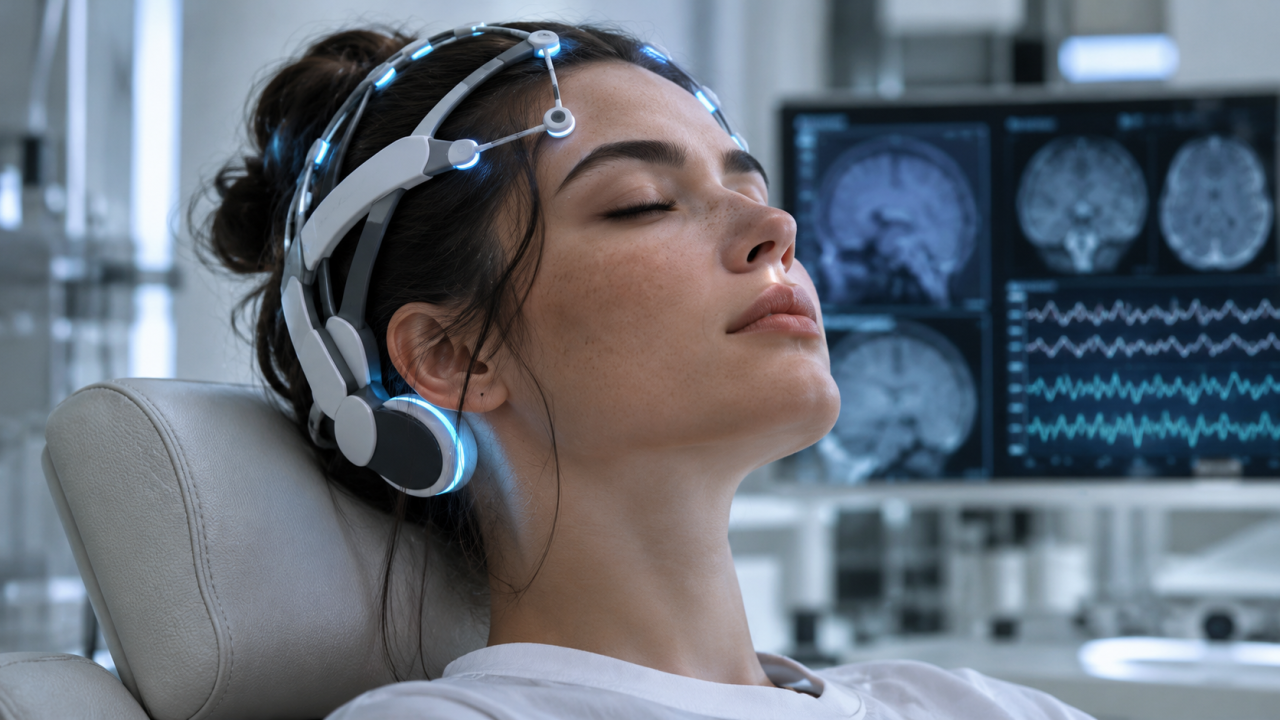
Building the Next Generation of Medical Neurotechnology
BrainPatch began with a mission to make non-invasive neurostimulation accessible through a convenient consumer product. Developing the device required the integration of electronics, software, stimulation control, and user experience into a single solution.
Today, this experience provides the foundation for a more ambitious objective: developing technologies intended for medical applications. The company is expanding its activities to address specific clinical needs, generate supporting evidence, and meet the requirements applicable to medical devices.
This transition goes beyond the potential applications of BrainPatch technology. It represents a fundamental evolution in how the company develops its solutions, validates their performance, documents engineering decisions, and prepares for future growth.
From Consumer Product Development to Medical Innovation
Entering the medical technology sector requires a dedicated development programme. While experience in bringing a consumer device to market provides a strong engineering foundation, medical applications must be justified in relation to their specific intended purpose, conditions of use, and target patient population.
For BrainPatch, this means adopting a development approach in which clinical needs define the requirements for future devices. What functions must a device perform? Under what conditions will it be used? Which risks must be controlled? What evidence will be required to demonstrate its safety and claimed performance?
Addressing these questions establishes a direct connection between engineering development, clinical evaluation, and regulatory strategy. This integrated approach is intended to become a cornerstone of BrainPatch's medical technology activities.
The company's ongoing medical device registration efforts form part of this broader transformation. Their purpose is to prepare both the technology and the organisation's processes to meet the regulatory requirements applicable to medical devices in the target market.
Embedding Medical Standards into the Organisation
Developing medical technologies requires the systematic establishment of a quality management system. For BrainPatch, this involves a more structured approach to product development, change control, supplier management, and technical documentation.
Within this framework, clear traceability must be maintained between a device's intended purpose, technical requirements, engineering decisions, and verification and validation results. Changes to hardware and software must be assessed for their potential impact on device safety and performance.
Risk management becomes particularly important. It must be integrated throughout the product lifecycle, from system architecture and component selection to manufacturing, operation, and post-market feedback analysis.
BrainPatch is beginning to adapt its operations to these principles. The objective is to establish an organisational foundation capable of supporting the consistent development of medical devices, maintaining reproducible quality, and generating verifiable evidence about the company's technologies.
This is a long-term undertaking. Its success will depend on establishing sustainable processes that remain effective beyond the completion of individual projects or the launch of specific device models.
REVERSE: Turning Medical Strategy into a Research Programme
One of the defining initiatives of this new phase is REVERSE, an international research and development project focused on creating a system for predicting and preventing epileptic seizures.
The consortium has a total budget of €2,627,082. Supported by the Eurostars programme, the project brings together partners from the United Kingdom, the Netherlands, and Switzerland. UK participation is funded by Innovate UK, part of UK Research and Innovation (UKRI).
At the heart of REVERSE is the concept of combining brain activity monitoring, artificial intelligence, and non-invasive neurostimulation into an integrated closed-loop system.
A wearable EEG patch is intended to continuously monitor brain activity, while AI algorithms will analyse incoming data to identify patterns associated with an increased risk of seizures. The project's stated research objective is to predict seizures approximately 10–30 minutes before their onset.
When an elevated risk is detected, the system is designed to initiate neurostimulation aimed at preventing a seizure from developing.
For people living with unpredictable seizures, the possibility of timely intervention could have significant implications. Establishing whether such an approach can operate safely and effectively is among the central objectives of the development programme and subsequent research.
BrainPatch at the Intersection of AI and Neurostimulation
Within REVERSE, artificial intelligence becomes part of a system designed to respond to a person's physiological state. The value of this approach will depend on how reliably data analysis can be connected to appropriate and timely intervention.
BrainPatch contributes its expertise in non-invasive neurostimulation and device manufacturing. These capabilities are essential to developing the component of the system intended to respond to an identified seizure risk.
Alpha Brain Technologies, based in the Netherlands, leads system integration and AI-based seizure prediction. Clinical validation is led by the Swiss university hospital Centre hospitalier universitaire vaudois (CHUV).
This distribution of expertise enables technological development to proceed in close coordination with clinical evaluation. For BrainPatch, participation in the consortium means working within an environment where hardware design, algorithms, and evidence requirements must be aligned around a shared research objective.
The project also expands BrainPatch's involvement in applied artificial intelligence. Its technologies are becoming part of an investigational system that combines predictive analysis with physical intervention in the nervous system.
Establishing a New Foundation for Long-Term Growth
The expansion into medical technology broadens BrainPatch's long-term development opportunities. Alongside its experience in consumer product development, the company is building the capabilities required to address clinical challenges and develop regulated medical technologies.
As this strategy progresses, new measures of achievement will become increasingly important: documented development processes, clinical evidence, established quality management procedures, and the successful completion of applicable regulatory milestones.
These outcomes will determine the readiness of future medical solutions for further development and eventual market entry.
This work also creates opportunities for deeper collaboration with research institutions, clinical centres, and technology partners. At the same time, it requires disciplined planning. Medical device development involves additional testing, investment, and regulatory timelines, while claims regarding safety and performance must be supported by appropriate evidence.
BrainPatch views this stage as a natural progression of its accumulated expertise. Experience gained through the development and commercialisation of devices is finding new applications, while international collaboration enables the company to address challenges requiring the integration of multiple scientific and engineering disciplines.
Consumer Products and Medical Development: Two Distinct Pathways
The development of BrainPatch's medical technology activities does not automatically change the intended purpose or regulatory status of its existing consumer devices.
The company's e-Meditation product line is designed for relaxation and meditation practices. Medical technologies under development have their own intended purposes, evidence requirements, and regulatory pathways.
Research findings relating to a particular medical solution cannot automatically be applied to other BrainPatch products.
Maintaining this distinction enables the company to develop both areas responsibly: preserving the clearly defined purpose of its existing consumer products while establishing the scientific, technical, and regulatory foundations for future medical devices.
The Next Chapter for BrainPatch
BrainPatch is beginning a new chapter in its development. The company is expanding into medical neurotechnology, progressing its medical device registration efforts, and aligning its associated development and quality management processes with the requirements of the medical technology industry.
REVERSE gives this transition a concrete research foundation, bringing together a clearly defined clinical challenge, an international consortium, and a collaborative development programme.
Participation in the project connects BrainPatch's future development with one of the most significant challenges in modern neurotechnology: creating systems capable of analysing physiological conditions and delivering timely interventions.
The next stages of this journey will be shaped by testing outcomes, clinical evaluation, and the completion of applicable regulatory procedures.
Through this work, BrainPatch is establishing the foundations for its next phase of growth — evolving from a company with proven experience in consumer neurotechnology into one that combines this expertise with the development of medical neurotechnology solutions.
Learn more about the REVERSE project: Official UKRI Gateway to Research project page.