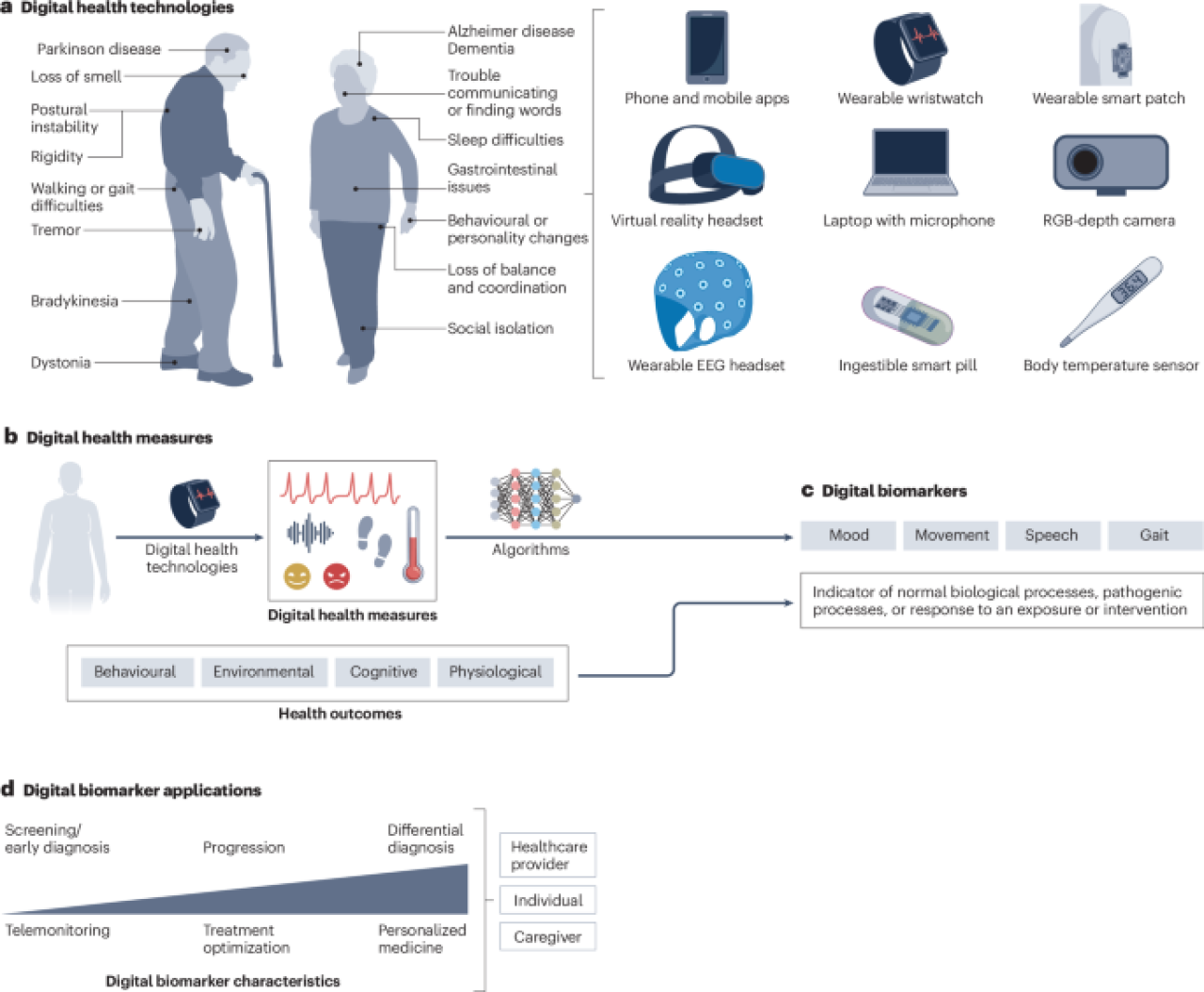
A Stanford-led team published a framework paper in Nature Reviews Bioengineering on 23 April 2026 that maps digital biomarkers (DBMs) for neurodegenerative diseases by how signals are measured, why they are measured, and what they measure.
The authors define DBMs as device-derived measures from wearables, mobile devices, implantables and ambient sensors and group them along three pillars: sensing modality, targeted health aspect (motor, cognitive, behavioural, physiological, environmental, molecular) and clinical utility (diagnosis, monitoring, treatment optimization).
The review highlights where evidence is strongest. Motor DBMs — especially gait measured with inertial sensors — show the most consistent performance across disorders. The paper cites WATCH‑PD, a 12‑month smartwatch study of early, untreated Parkinson’s (n=82), and examples where clinic-grade devices changed care: an observational study using the Personal KinetiGraph (PKG) (n=70) altered initial treatment in 31.8% of participants and routine-care reports linking PKG review to treatment changes in a high fraction of visits and patients.
The authors also call out promising ambient and contactless signals. A radio-wave nocturnal-breathing model predicted Parkinson’s disease with an AUC of 0.906 in one study, and an eye‑tracking tablet assessment (Altoida DNS) produced AUCs of 0.94 in MCI and 0.91 in at‑risk cognitively normal groups in published cohorts cited in the review.
But the paper stresses gaps. Most DBM studies remain small or cross‑sectional. The authors recommend larger, 5–10 year digital cohorts, broader population diversity, standardization for sensor interoperability and formal cost‑effectiveness analyses. They note regulatory and classification gray areas — for example when a digital measure straddles a biomarker and a clinical outcome — and highlight the need for interpretable, personalized AI models rather than one‑size‑fits‑all algorithms.
The review provides a taxonomy and use cases intended to guide clinicians, trialists and device developers toward evidence-based translation of DBMs into monitoring, trial endpoints and treatment decision tools.
Photo credit: media.springernature.com
Tags: digital biomarkers, wearables, Parkinson's disease, Alzheimer's disease, ambient sensors
Topics: Wearable neurotech, EEG & neuro-sensing headsets, Sleep technology