Meta research grants and scope
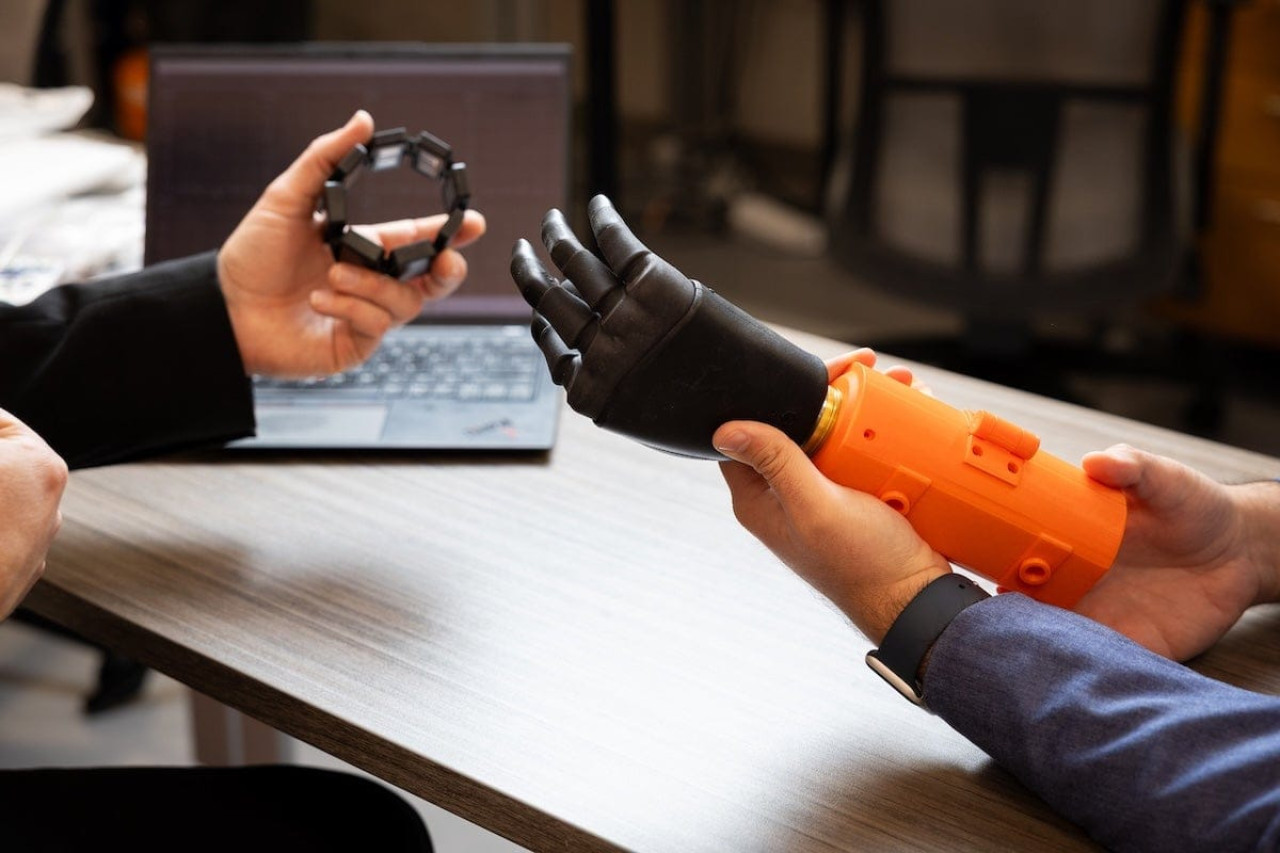
Meta has awarded research funding to six university teams to study how wrist-based surface electromyography (sEMG) can be used as a hands-free input modality for computing and communication. Each team received $150,000 to investigate learning, signal control, accessibility, privacy, and ethical questions tied to sEMG-driven interfaces. According to Meta’s announcement, the awards focus on wristband sEMG systems similar to the sensors the company has been demonstrating alongside its wearable eyewear products.
University projects and technical aims
University of British Columbia — sEMG-Talk: UBC will develop a forearm sEMG-to-speech pipeline that combines multi-channel sEMG with machine learning to generate intelligible speech without vocal tract movement. The project pairs algorithm development with a neuroethics framework to examine consent, communicative agency, and potential for unintended inference.
University of California, Davis — Learning modalities: UC Davis will compare structured instruction, gamified training, and implicit learning paradigms to see which methods produce faster, more robust sEMG control across diverse users. The study will test demographic factors such as age and examine how social support and affective response shape retention and usability.
University of South Florida — Subtle-signal control and rehabilitation: USF will focus on voluntary modulation of low-amplitude muscle signals that do not produce visible movement. The team will include stroke survivors to study rehabilitative potential, trust and perceived agency, and user preference for control mappings.
Newcastle University — Multi-sEMG, higher bandwidth: Newcastle researchers will evaluate multi-sEMG configurations intended to expand communication bandwidth while permitting concurrent normal hand use. The project includes user studies on acceptance and attitudes toward centralized data collection and long-term logging of biosignals.
University of Central Florida — Co-adaptive training and embedded ethics: UCF will investigate co-adaptation strategies in which both model and user iteratively improve, and will integrate ethics work directly into engineering — addressing privacy-preserving learning rules, embodiment, and transparent control transfer.
Northwestern University — Gradual vs AI-accelerated skill acquisition: Northwestern will compare incremental skill-building with AI-assisted training approaches that accelerate acquisition of multiple muscle inputs. The work will enroll both non-injured participants and people with stroke or spinal-cord injuries and will include ethics advisory input from project inception.
Why the focus on learning and agency matters
Research teams emphasize learning and human factors because decoding sEMG signals is only part of the challenge; making those signals feel intuitive, reliable, and secure in daily life is equally important. sEMG systems must solve two intertwined problems: improving algorithmic robustness to biological and environmental variability, and designing training regimes and interfaces that let users acquire, maintain, and trust control.
Practical connections to existing products
Meta positions these grants as extending the engineering work behind wristband sEMG demonstrations and deployed eyewear features. Meta already ships gesture and handwriting features in its Ray-Ban branded displays and has demoed a wristband prototype linked to its Orion glasses; these grants target research questions that make such features usable for a wider population, including people with motor impairment.
Ethics, privacy, and data-risk considerations
The funded projects deliberately pair technical goals with ethics and privacy inquiry. Key concerns researchers will examine include:
Unintended inference — whether models trained on sEMG can reveal more about a user (intent, emotion, private speech) than intended.
Data minimization and on-device processing — reducing risk from centralized collection and improving user control over raw biosignals.
Consent and agency — designing interaction models that make control transfer explicit and reversible for users with differing cognitive and motor abilities.
Researchers and funders note that long-term adoption will depend on trustworthy data governance, robust security practices, and inclusive evaluation that centers people with disabilities and diverse body types.
Implications and next steps
These six awards reflect a broader industry push to move beyond proof-of-concept demos to evidence-driven, human-centered evaluation of wearable biosignal interfaces. Over the coming months and years expect publications and open datasets from these teams that will clarify which training approaches and model architectures scale, and which governance practices best mitigate privacy and agency risks.
Takeaway: Meta's $150,000-per-team grants fund a coordinated effort to transform wrist sEMG from demo tech into practical, accessible input — pairing algorithmic work with inclusive design and ethics to address usability, rehabilitation potential, and data-risk concerns. For full details, see Meta’s research announcement and participating universities’ project pages.
Photo credit: www.uploadvr.com
Tags: sEMG, wearable neurotech, accessibility, machine learning, ethics
Topics: Wearable neurotech, Brain–computer interfaces, Neurotech industry & startups