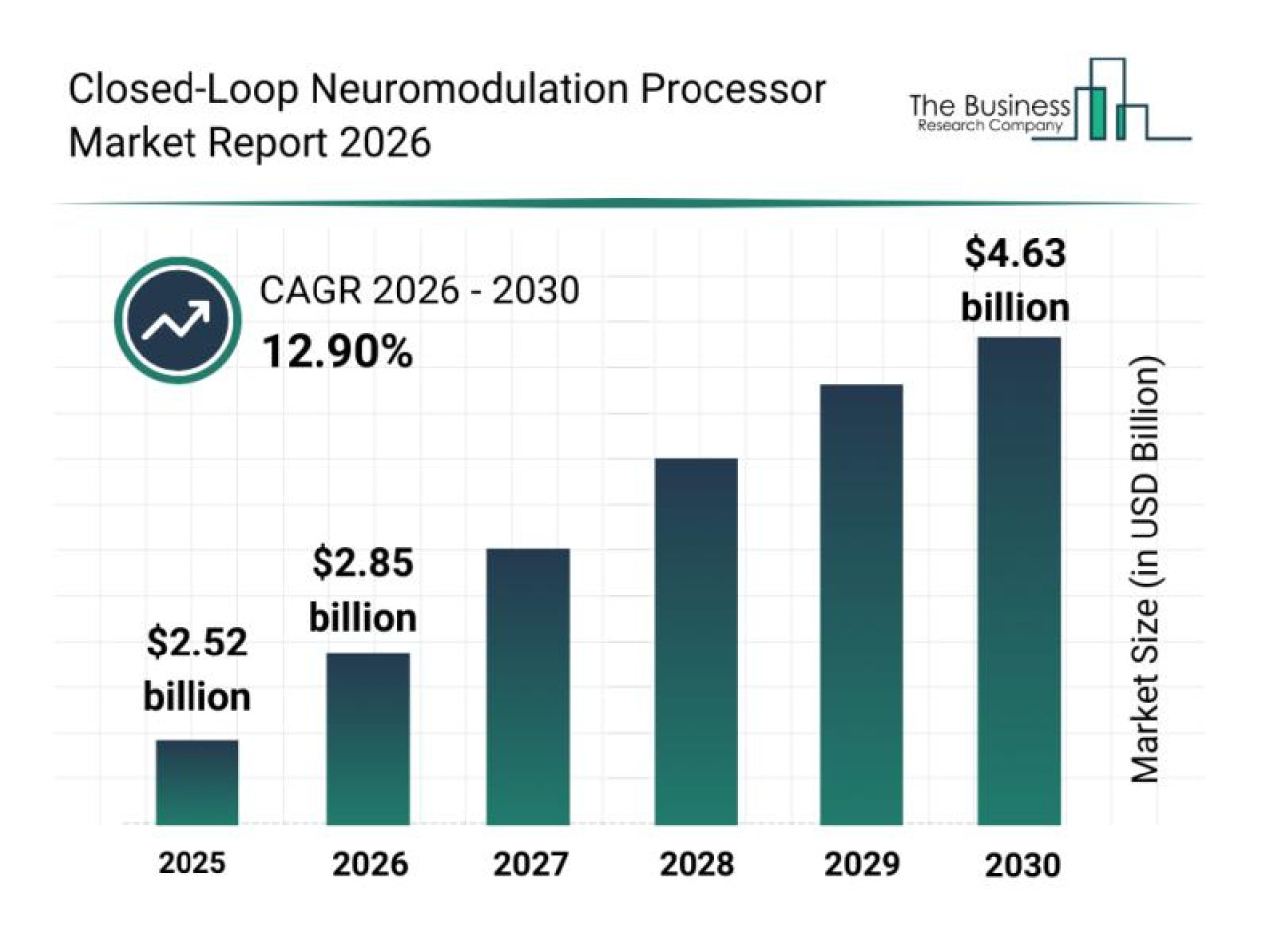
The Business Research Company projects the closed-loop neuromodulation processor market will reach $4.63 billion by 2030, a compound annual growth rate of 12.9%, the firm said in a report published on OpenPR.
The report attributes the growth to a cluster of commercial and technical trends: AI-powered adaptive processors, rising use of external wearable controllers, integration with telemedicine and remote monitoring, expanded home-based therapies, and greater penetration in emerging markets. It highlights real-time neural feedback and adaptive stimulation algorithms as central technical drivers.
The report lists major players in the sector, including Abbott, Medtronic, Boston Scientific, NeuroPace, Saluda Medical, Inbrain Neuroelectronics, Blackrock Neurotech and others. It notes a past deal: UK firm Amber Therapeutics acquired Bioinduction in September 2023 to add the Picostim DyNeuMo cranial neurostimulator to its portfolio.
As a concrete example of commercial progress, the report cites Medtronic’s February 2025 FDA approvals for BrainSense Adaptive Deep Brain Stimulation (aDBS) and the BrainSense Electrode Identifier. The report frames that approval as one of the larger commercial rollouts of BCI-linked closed-loop DBS, and states that trials of adaptive stimulation have shown reduced motor fluctuations and improved symptom control versus continuous DBS.
The report breaks the market into product and application segments, including implantable and external processors; technologies such as DBS, spinal cord stimulation and vagus nerve stimulation; and clinical uses such as chronic pain, epilepsy, Parkinson’s disease and depression.
Readers can view a sample of the report on The Business Research Company site. The press release focuses on market sizing and vendor activity rather than on new clinical data or independent trial results.
Photo credit: cdn.open-pr.com
Tags: closed-loop neuromodulation, deep brain stimulation, brain–computer interfaces, wearable neuromodulation, implantable processors
Topics: Neuromodulation, Deep brain stimulation, Brain–computer interfaces