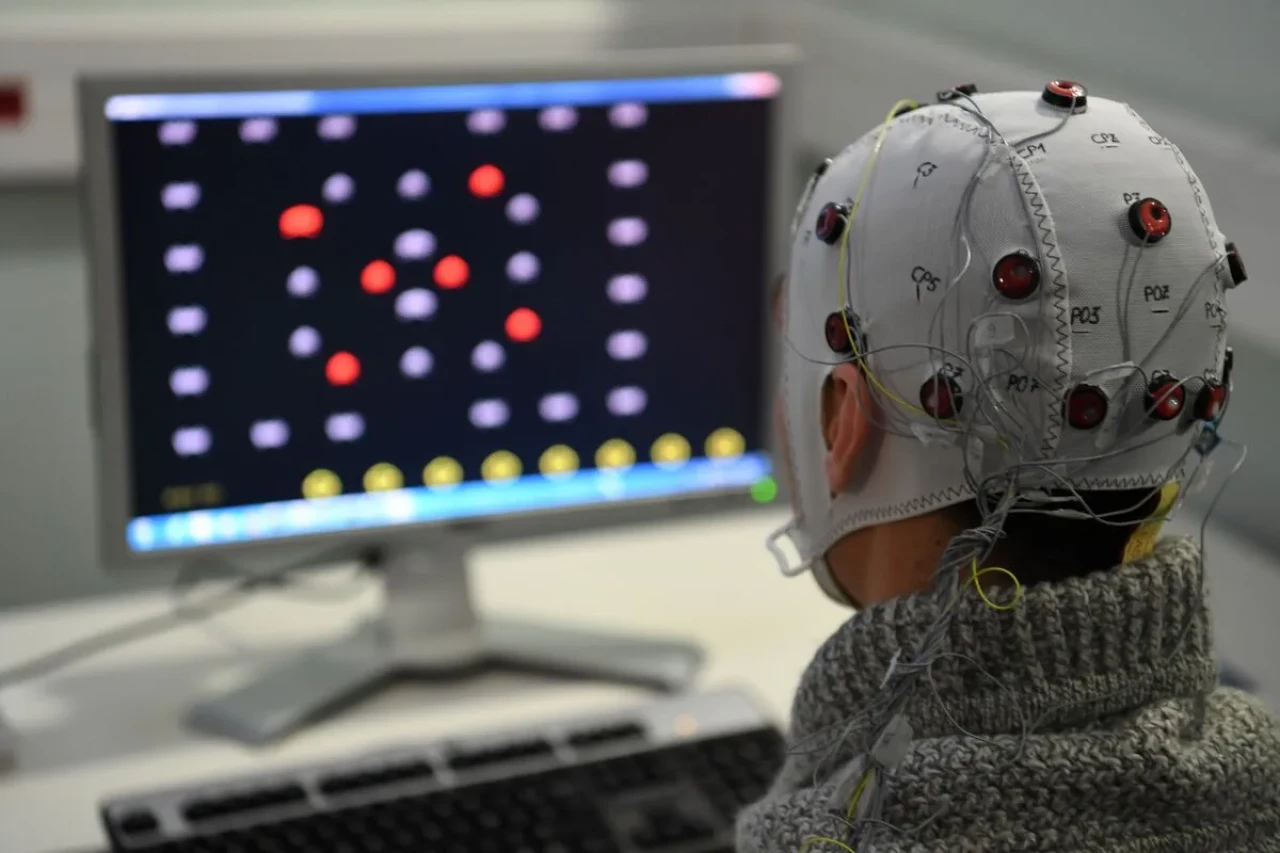
Brain–computer interface (BCI) chips read neural activity and convert those signals into digital commands used to control computers, prosthetics, or communication systems, according to the source material reviewed for this explainer.
BCI chips can be worn on the head, placed under the scalp, or implanted into brain tissue. Each placement trades signal clarity against surgical risk: electrodes closer to neurons pick up stronger signals but typically require more invasive procedures.
Key hardware elements are microelectrodes that detect electrical activity, onboard signal processors that filter and translate signals, and wireless transmitters that send decoded commands to external devices. The device-level function is straightforward: capture voltage changes produced by neurons, use algorithms to decode intended actions, and deliver commands to a computer or actuator.
Clinically, the most common uses reported in the source are restoring movement and enabling communication for people with paralysis or ALS. Examples include using decoded neural signals to drive robotic limbs or to select text and speech output. Training typically involves neurofeedback and software calibration so the system maps a user’s neural patterns to intended actions.
Implantation is a surgical procedure with standard risks such as infection or device complications. The source notes that teams offering implants typically combine neurosurgeons, engineers, and rehabilitation specialists to manage implantation, tuning, and user training.
The page also highlights non-technical issues: some market projections cited place the sector’s value rising from about $2 billion in 2023 to roughly $6.2 billion by 2030. It flags data privacy, device security, and ethical oversight as outstanding challenges that regulators and developers need to address.
In short, BCI chips are described as compact systems that translate neural activity into action. Their current, documented value lies largely in medical applications for mobility and communication, while safety, privacy and regulatory frameworks remain active concerns.
Photo credit: livhospital.b-cdn.net
Tags: brain-computer interfaces, neural implants, neuroprosthetics, signal processing
Topics: Brain–computer interfaces, Neuroprosthetics & neural implants, Wearable neurotech