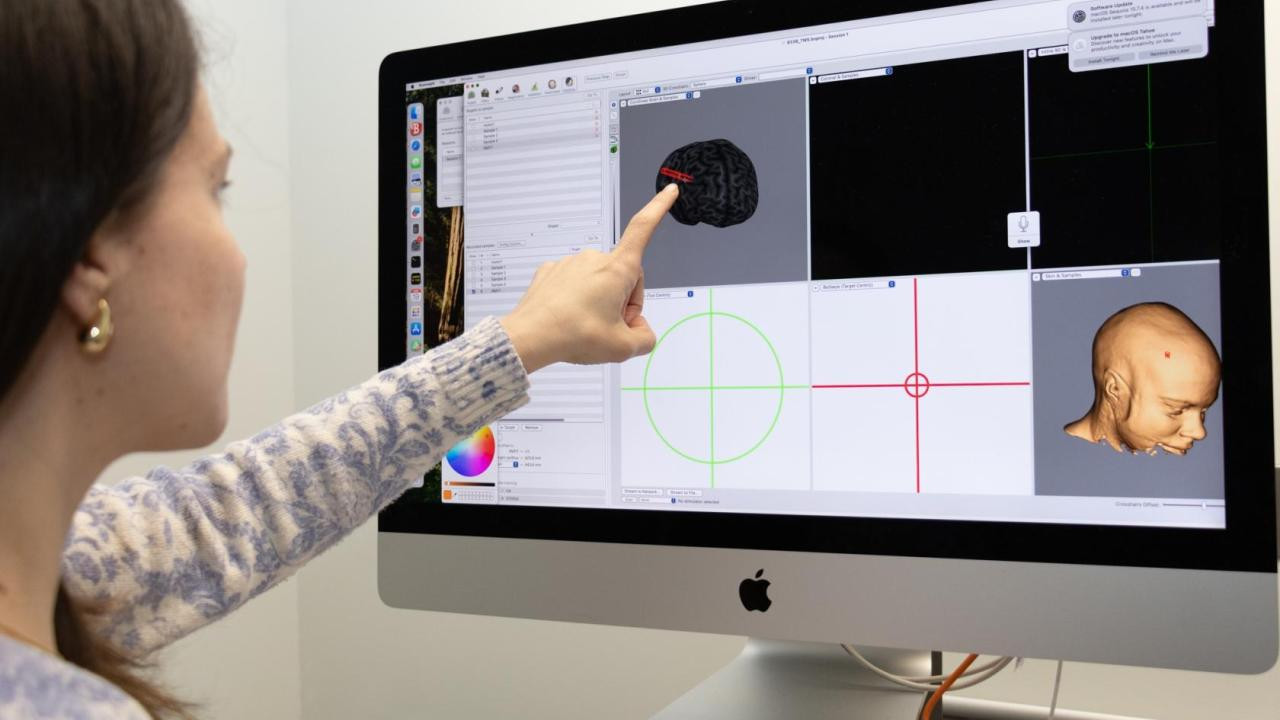
Columbia University psychologist Alexandra Muratore received the GFED Young Investigator Award to fund a study using repetitive transcranial magnetic stimulation (rTMS) to probe brain circuitry tied to restrictive eating in anorexia nervosa. The grant, funded by the National Eating Disorders Association, will support tests of whether changing activity in a specific circuit alters symptoms.
Muratore's team plans to use rTMS, a non‑invasive magnetic stimulation delivered via a coil held near the scalp, to change activity in targeted brain regions. The method induces small electric currents and is already FDA‑cleared for major depressive disorder; the source notes rTMS has since been approved for migraine, smoking cessation and obsessive‑compulsive disorder.
“After witnessing the chronic course and the devastating effects anorexia nervosa can have on patients and their families, I was inspired to focus my research on combining neuroimaging and brain stimulation methods to inform the development of more effective treatments,” Muratore said.
The research will first test whether manipulating a candidate circuit produces measurable changes in restrictive eating behavior. Muratore framed this as a mechanistic step: if altering activity in that circuit changes symptoms, it would strengthen the case for developing a tailored rTMS treatment aimed at those regions.
The team says the project is intended to map the brain regions most relevant to restrictive eating and to guide future, treatment‑focused trials. The award supports early-stage work rather than a completed clinical intervention; Muratore and colleagues call the study a foundation for mechanism‑based treatment development.
Photo credit: www.cuimc.columbia.edu
Tags: anorexia nervosa, repetitive transcranial magnetic stimulation, rTMS, neurostimulation, eating disorders
Topics: Non-invasive brain stimulation, Neuromodulation, Neuroscience & neuroplasticity