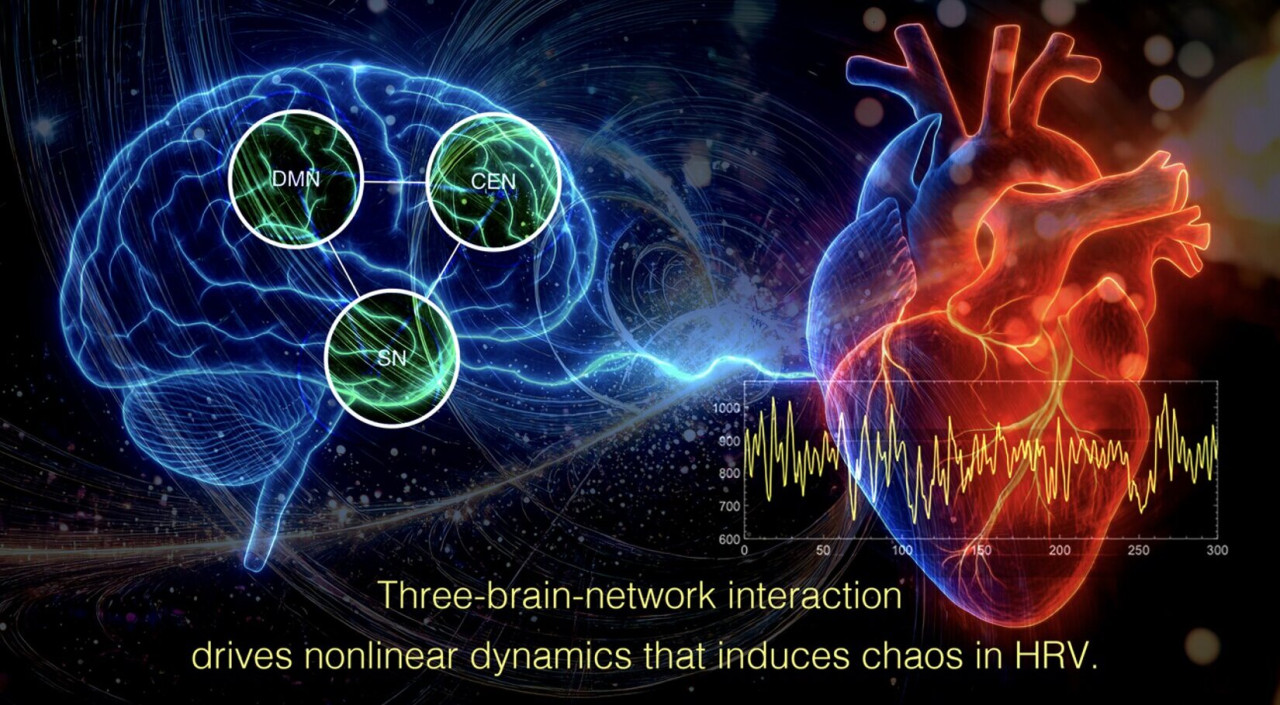
Researchers at Kyoto University report that chaos-based analysis of heartbeat variability reveals clear, reproducible changes when people perform cognitive tasks, while conventional heart rate variability (HRV) indices show little or no consistent response.
The study, published in Scientific Reports in 2026 (doi.org/10.1038/s41598-026-43385-z), compared standard time-domain and frequency-domain HRV measures with metrics derived from nonlinear dynamics and chaos theory. The authors wrote that only the chaos-based measures tracked task engagement reliably.
"One of the most striking findings of our study is that only chaos responded under cognitive load," said team leader Ken Umeno. The paper frames chaotic fluctuations in heartbeat timing not as noise but as a signal that reflects system-level integration between the central nervous system and the cardiovascular system.
The work was done in collaboration with Toshiba Information Systems Corporation, whose signal-processing expertise the authors say helped identify subtle nonlinear patterns in the physiological recordings. The paper does not report new regulatory steps or clinical trials; it presents experimental task-based comparisons and analysis methods.
The authors highlight potential applications where a noninvasive, continuous indicator of cognitive state could help — for example stress monitoring, mental-health assessment, neurorehabilitation and human–machine interaction — and say they are seeking partnerships with medical centers and research groups to validate the findings across populations and clinical settings.
Because HRV is easy to measure with wearables and bedside monitors, the study suggests that adding chaos-based analysis could extend those devices' sensitivity to higher-order brain activity. The authors caution that broader validation is needed before clinical use.
Photo credit: scx2.b-cdn.net
Tags: heart rate variability, chaos analysis, brain–heart coupling, cognitive load, nonlinear dynamics
Topics: Wearable neurotech, Stress, focus & mental clarity, Biofeedback & neurofeedback