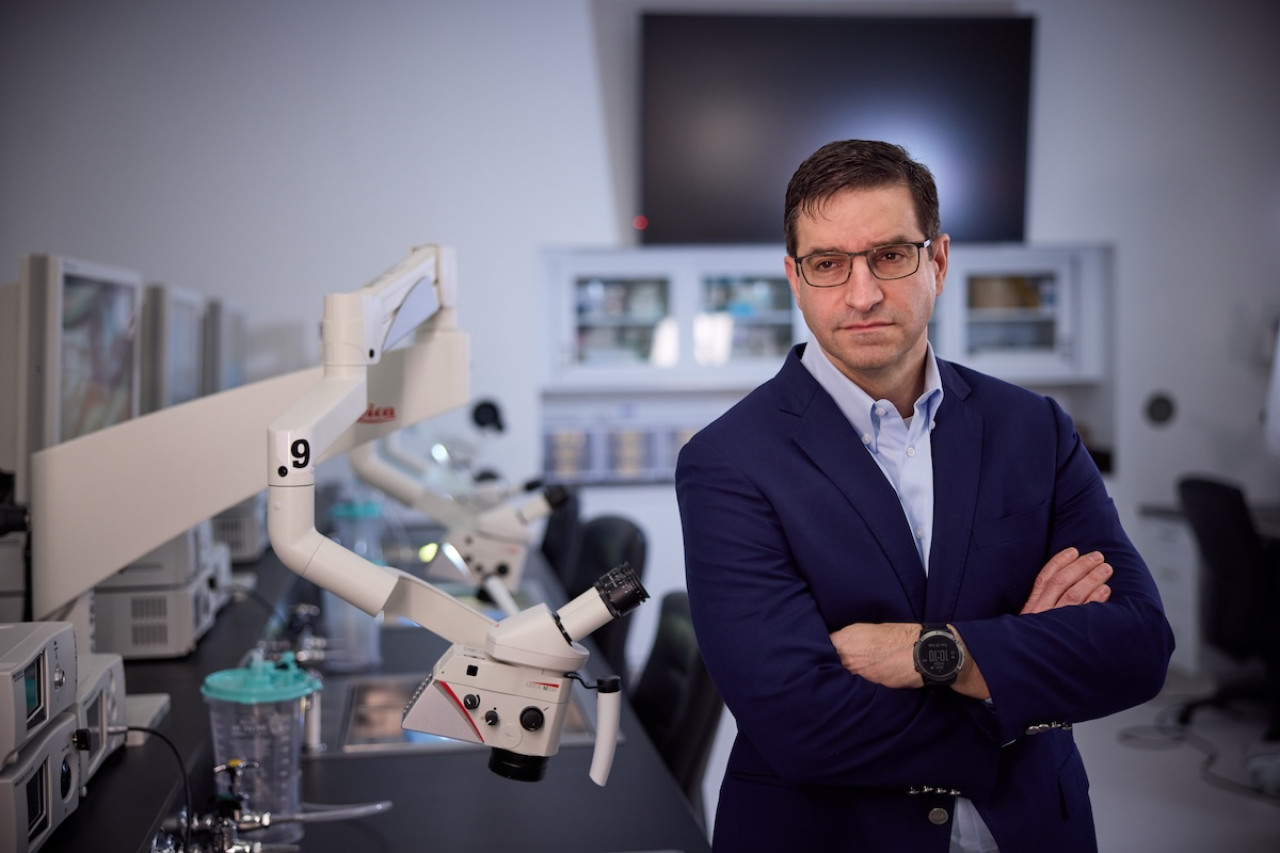
Aurenar’s earbud-like V-Link System has received FDA Breakthrough Device Designation for reducing a dangerous narrowing of brain blood vessels that can follow bleeding from a ruptured aneurysm.
The designation speeds the agency’s review of devices that show clinical promise for serious conditions. WashU Medicine physician-scientists who developed the method say the device uses transauricular branch vagus nerve stimulation (taVNS) — low-energy electrical pulses delivered to the outer ear — to blunt the inflammatory response that can drive cerebral vasospasm after subarachnoid hemorrhage.
WashU-led clinical data cited by Aurenar come from an early trial of 27 patients with aneurysmal brain bleeding. Investigators reported a 40% reduction in vasospasm among patients who received ear stimulation plus standard care versus standard care alone. Treated patients also had lower levels of inflammatory cytokines in blood and cerebrospinal fluid, no device-related adverse events, and better functional outcomes at 90 days, including fewer hospital readmissions and fewer discharges to skilled nursing facilities.
Company materials say the intended treatment regimen is 20 minutes twice daily during an approximately two-week intensive-care stay. Aurenar and WashU also reported a health-economic analysis indicating lower acute-care costs tied to fewer complications and shorter stays.
WashU neurosurgeon Eric Leuthardt, who cofounded Aurenar and is named in the materials as the Shi Hui Huang Professor of Neurological Surgery, said the device “shows promise in reducing complications and improving outcomes in critically ill patients.” Anna Huguenard, a WashU assistant professor of neurosurgery, led the clinical work with Leuthardt, the company said.
WashU researchers also noted early positive signals from a separate trial of taVNS in patients with large-vessel ischemic stroke, where lower inflammatory markers correlated with less disability, according to investigators Jin-Moo Lee and Osvaldo Laurido-Soto in the company’s account.
Aurenar received early support from Washington University’s Office of Technology Management and local investors, and the company said the Breakthrough Device designation validates efforts to commercialize the WashU technology ahead of a formal FDA marketing review.
Photo credit: medicine.washu.edu
Tags: vagus nerve stimulation, subarachnoid hemorrhage, taVNS, Aurenar V-Link, wearable neuromodulation
Topics: Neuromodulation, Vagus nerve & taVNS, Wearable neurotech