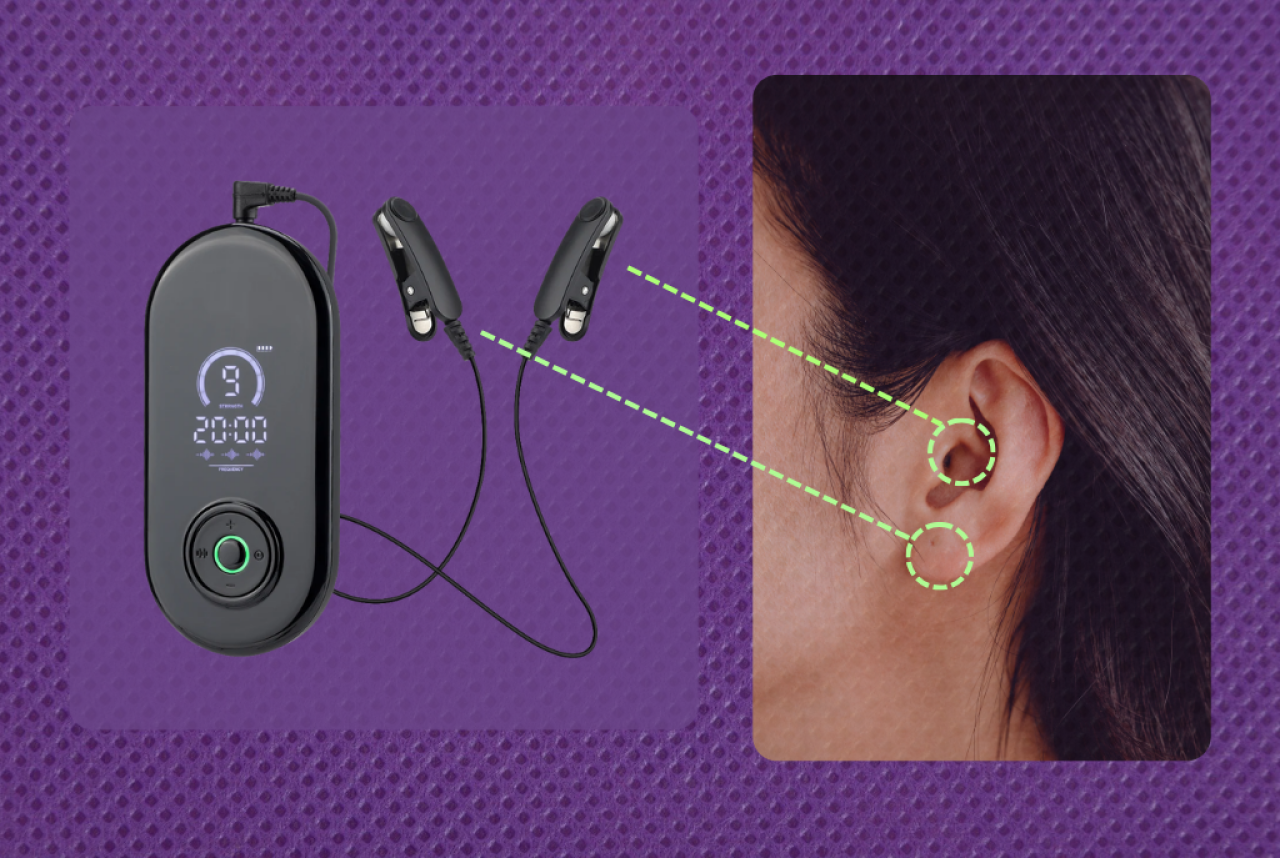
Patients with Long COVID and ME are experimenting with transauricular vagus nerve stimulation (taVNS) at home, reporting anything from symptom relief to severe crashes, while small trials and surveys show mixed results and no clinical guidelines yet.
taVNS uses an ear clip to send electrical pulses to a branch of the vagus nerve in the outer ear. Devices range from inexpensive TENS units (~$60–$70) to specialized taVNS systems costing several hundred euros. Users mostly follow online protocols or manufacturer instructions; only a small fraction get professional guidance.
First-hand reports published by The Sick Times include serious adverse events. One patient said two ten-minute sessions led to extreme vertigo and a hospital diagnosis of vestibular neuritis; the vendor later refunded her. Other users describe intense burning sensations or prolonged crashes after sessions. Some report short-term relief of fatigue, breathing problems or cognitive symptoms while using stimulation.
Clinical trials, a survey, and ongoing work
A 2024 international survey by Physios for ME and collaborators asked 116 people with ME about neuromodulation. Fifty-six percent rated taVNS as beneficial; 6% said symptoms worsened. Only 8.6% had device guidance from a healthcare provider. One respondent reported a severe crash lasting months.
Small clinical studies are underway or recently completed. A 2025 pilot led by Richard Crevenna tested home use with 36 women and reported symptom improvements but was too small to compare stimulation parameters. A German trial with 45 participants found no significant difference between active, subthreshold and placebo stimulation. Karen Leslie’s 40-participant feasibility study compared 12 weeks of active stimulation with placebo; results are not yet available. Benjamin Natelson’s randomized study at Mount Sinai is recruiting, and the STIMPACT crossover trial at the University of Luxembourg is collecting data through 2026.
Researchers say variability in biomarkers, day-to-day physiology and inconsistent measurement protocols (for example for heart rate variability) make trial results hard to interpret. Michael VanElzakker is using an fMRI-compatible device to probe vagus-nerve sensitivity in Long COVID; findings are pending.
Clinicians quoted in the reporting recommend caution: start at very low settings, consult a physician if you have autonomic instability or heart irregularities, and introduce only one new treatment at a time. “This machine is not for everybody,” one patient said.
Photo credit: thesicktimes.org
Tags: taVNS, Long COVID, vagus nerve, TENS, clinical trials
Topics: Vagus nerve & taVNS, Neuromodulation, Wearable neurotech