BrainPatch Academic Program
Research-grade neuromodulation, built for your lab.
The same multimodal device behind our published double-blind RCTs — combining taVNS, GVS, and music-driven CNS activation — now available with full SDK access, academic pricing, setup support, and co-authorship opportunities.
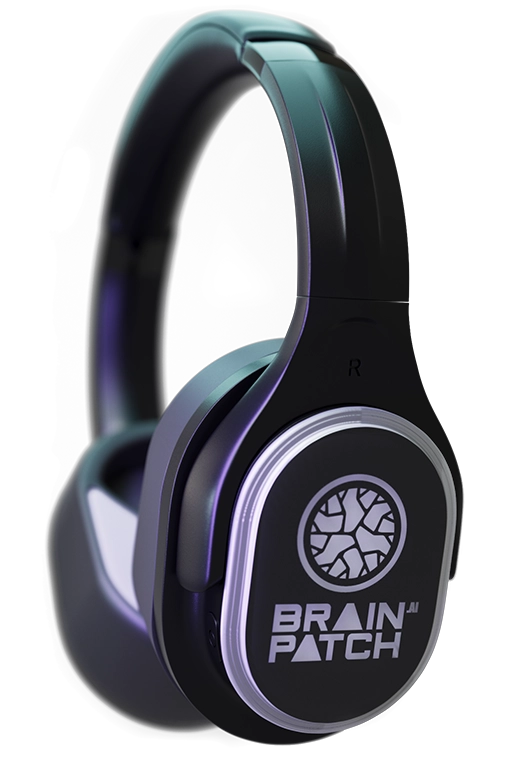
One device, three stimulation modalities.
BrainPatch combines three complementary non-invasive stimulation pathways in a single headset — the same triple-modality stack behind our peer-reviewed RCT outcomes. Each modality is individually controllable via SDK.
Auricular Vagus Stimulation taVNS
Postauricular electrodes target the auricular branch of the vagus nerve (ABVN) — driving parasympathetic activation and HRV shifts.
Target: ABVN · tympanomastoid fissure
Galvanic Vestibular Stimulation GVS
Mastoid electrodes deliver galvanic stimulation to vestibular nuclei — modulating autonomic, cognitive, and mood-relevant pathways.
Target: Vestibular nuclei · NTS
Music-driven CNS Activation CNS
Audio component delivers calibrated auditory stimulation co-timed with electrical stim — leveraging music-driven central nervous system effects.
Target: Cortical entrainment · meditation-like EEG state
Built for nine research directions.
Each pillar maps to a distinct part of our research taxonomy and matches different lab profiles. We adapt the program — devices, SDK access, study design, co-authorship terms — to your direction.
Acute Autonomic Regulation
HRV, RMSSD, HF power, parasympathetic dynamics, recovery slope after stress
Triple Stimulation Mechanism
taVNS, ABVN, postauricular, GVS, music-driven CNS — factorial design support
e-Meditation Neurodynamics
Meditation-like EEG state, alpha / theta / frontal asymmetry, comparator studies
Personalized Threshold Stimulation
Sensory-threshold, intensity titration, dose-response, responder profiling
Closed-Loop HRV/EEG/ML
Real-time biosignal streams, adaptive protocols, brain-state classification
Workplace Stress Recovery
Burnout, occupational stress, healthcare worker wellbeing — corporate RCTs
Calm Focus & Cognitive Readiness
Cognitive fatigue recovery, mental workload, attention restoration
Affective Recovery
Emotional processing, ERP, frontal asymmetry, threat-bias paradigms
Safety & Tolerability
Independent tolerability assessments, longitudinal home-use safety studies
Six concrete components.
Not a discount-only program. We pair commercial access with the engineering, data, and authorship support labs actually need.
Academic pricing
Substantial discount on BrainPatch devices for labs. Volume pricing for multi-device studies. Net-30 terms available for institutions.
Full SDK
Real-time HRV and EEG streams, programmable stimulation parameters (intensity, frequency, pulse, ramp), Lab Streaming Layer compatibility. Bindings: Python, MATLAB, R, C++.
Setup support
Direct contact with our research engineering team for protocol calibration, hardware troubleshooting, data export, and integration with PsychoPy, OpenSesame, BIDS pipelines.
Ready to ship
Active product since 2024. Sales in 10+ countries (B2B and B2C). CE and EAC certified. Devices available for your study this month — not future.
Existing partnerships
Imperial College London, Tel Aviv University, NHS, Cerebra, Kaztelecom, Warner Music — and growing. We can introduce existing collaborators in your pillar.
Co-authorship
Joint publication opportunities on protocol design, data analysis, and resulting papers. We participate as collaborators, not as gatekeepers.
Double-blind RCT results, published.
Completed randomised placebo-controlled trial in office workers (n=56, double-blind), 5-day repeated stimulation. Outcomes published in IEEE EUSIPCO 2024 and SPSympo 2023 proceedings.
vs −8% in placebo group
higher than placebo group
vs −30% in control group
Lower LF/HF indicates a healthier sympathetic/parasympathetic balance — less stress, more calm. Full study details and methodology on the Science page.
Developer access
Programmable, by design.
Every stimulation parameter is exposed through our SDK — no firmware contact required. Researchers can implement custom titration protocols, closed-loop adaptive logic, or non-standard stim profiles directly from their experiment code.
- HRV streamingPPG + ECG, real-time
- EEG channelsMulti-channel, real-time
- Stim parametersIntensity, frequency, pulse, ramp
- Control loop latency~50 ms
- Streaming protocolsLab Streaming Layer, WebSocket
- Language bindingsPython · MATLAB · R · C++
# Sensory-threshold titration for a taVNS-like protocol
from brainpatch import Device

device = Device.connect()
threshold = device.find_sensory_threshold(method="staircase")
device.set_intensity(threshold * 0.8)
device.set_frequency(hz=25)

with device.stream("hrv") as stream:
    device.start_session(duration_min=20)
    for sample in stream:
        if sample.rmssd > target_recovery:
            device.stop_session()
            break
From the field
What researchers say.
Prof. Elisa Raffaella Ferrè, PhD
Head of School of Psychological Sciences, Birkbeck University of London
I've worked with galvanic vestibular stimulation for over 10 years, but BrainPatch headset is the most effective, versatile and well-packaged device I have seen.
Dr. Iain Strickland, PhD
Neuroscience and Pharmacology
非侵襲的刺激器が迅速な生物学的効果をもたらすという点で、これまでで最も説得力のある主張だと感じました。

Sinee Wright
Meditation Science Expert
試した他の脳刺激デバイスより、BrainPatchのデバイスははるかに効果的でした。
Behind the device
Built by Cambridge neuroscientists.
PhD-level scientists and engineers backed by world-class advisors — including Jamie Urquhart (Co-Founder, ARM), Prof. Paul Fitzgerald (Australian National University), Prof. Steve Potter (closed-loop stimulation pioneer), and Frank Zanow (CEO, ANT-Neuro).
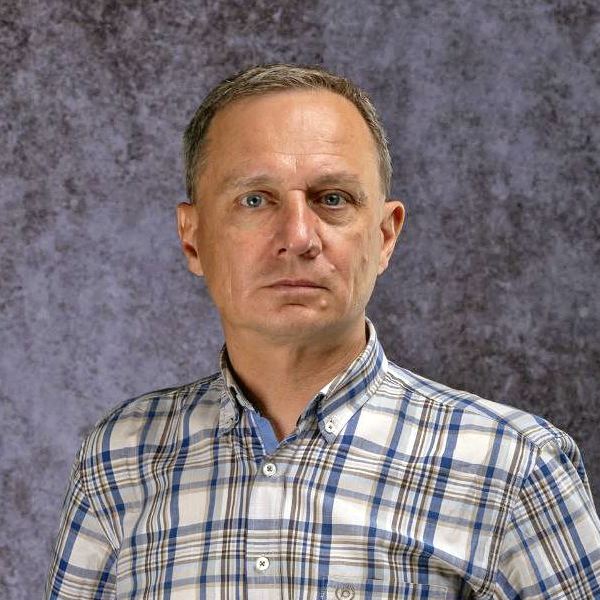
Dr Sergii Tukaiev, PhD
Chief Neuroscientist
Taras Shevchenko National University of Kyiv · Institute of Biology
Psychophysiology researcher with 1,100+ citations on Google Scholar. Work spans EEG cognitive workload, emotional burnout, sport neuroscience, and co-authored BrainPatch neuromodulation studies.
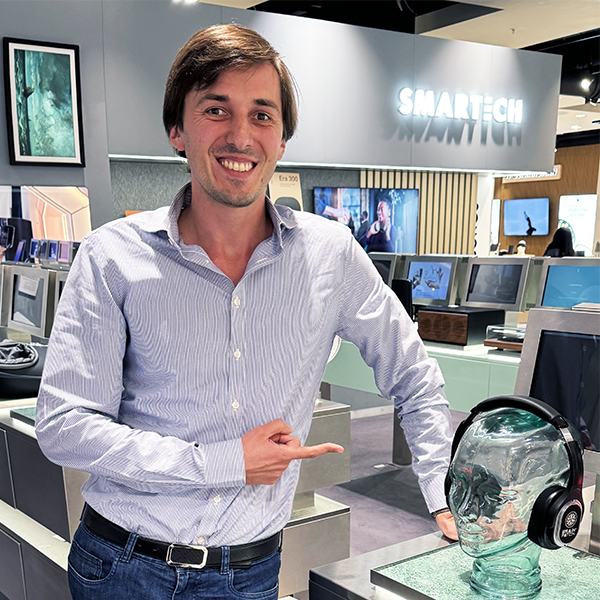
Dr Nickolai Vysokov, PhD
CEO · Co-founder · Inventor
Imperial College London · King's College London
Neuroscientist publishing in top-tier journals. Founded BrainPatch to make non-invasive stimulation accessible at scale.

Dauren Toleukhanov, MA
Co-CEO · Co-founder
University of Westminster
Business and investment background — former CEO of Centre for Trade Policy Development and Managing Director of Sovereign Wealth Fund of Kazakhstan.

Yaroslav Gachshenko
Chief Technology Officer
Certified Agile Coach (ICP-ATF)
Lead architect of BrainPatch's software ecosystem and SDK. Develops the technology and is also its primary user.
Universities, hospitals, retailers already using BrainPatch.
We're actively shipping to research institutions, healthcare providers, and corporate wellbeing programs. Existing partners we can introduce you to:
Imperial College London
Purchase completed
Tel Aviv University
Research collaboration
NHS
Expression of interest
Cerebra
Purchase completed
Kaztelecom
Purchase completed
Warner Music
Successful pilot
Selfridges
Retail partner
Caputron (USA)
Distribution
BrainPatch publications.
Peer-reviewed and conference publications spanning HRV dynamics, EEG state markers, burnout-related outcomes, and safety in healthy volunteers. Full BP1–BP10 list and 17 related references on the Science page.
-
BP1
Effectiveness of Threshold-Level Vagus Nerve Stimulation in Modulating Psychoemotional States
Clinical and Preventive Medicine · 2026 · Gachshenko Y., Zhadigerova A., Vysokov N., Tukaiev S. et al. -
BP2
On the central mechanisms of normalizing effect of vagus nerve stimulation
European Psychiatry · 2025 · Tukaiev S., Vysokov N., Gachshenko Y. et al. -
BP3
Recovery of Autonomous Balance as Indicator of Normalizing Effects of Non-Invasive Vagus Stimulation
IEEE EUSIPCO 2024 · Gachshenko Y., Vysokov N., Tukaiev S. et al. -
BP9
Determination of the Effects of Transcutaneous Auricular Vagus Nerve Stimulation on Heart Rate Variability Using a Machine Learning Pipeline
Bioelectricity · 2022 · Vysokov N., Tarasenko A., Guazzotti S. et al. -
BP10
Beneficial effects of transcutaneous auricular vagus nerve stimulation on emotional state and cognitive functioning
IEEE SPSympo 2023 · Tukaiev S., Pravda O., Vysokov N. et al.
From application to publication.
Six clear steps with predictable timing. Most labs are running their first BrainPatch session within 3 weeks of applying.
Submit application
5-minute form below. Tell us about your direction.
Day 0
Initial reply
Scoping questions, request for protocol draft.
Within 2 days
Discovery call
20 min with founder or research engineer. Tailored proposal.
Week 1
Devices ship
Standard config 5 business days; custom batches 2–3 weeks.
Week 2–3
Setup & collaboration
Hands-on support, SDK onboarding, joint publication scoping.
Ongoing
Apply now
Bring BrainPatch into your lab.
Tell us about your research direction, protocol idea, or planned study. We respond within 2 business days with a tailored proposal — devices, SDK access, collaboration terms.
Frequently asked
Common questions from research teams.
What discount do labs get?
Academic pricing is significantly below retail. Final discount depends on study size and partnership scope; we share a tailored quote after the first 20-minute call.
Is the SDK officially documented?
Yes. Python and MATLAB bindings ship with full docs and tested example notebooks. R and C++ bindings are available on request. Lab Streaming Layer integration is plug-and-play.
Can we control stimulation parameters in real time?
Yes — every parameter (intensity, frequency, pulse width, duty cycle, ramp) is exposed via SDK with a ~50 ms control loop, suitable for closed-loop protocols driven by real-time HRV or EEG.
What does "co-authorship" mean in practice?
For protocol design, technical input, and data analysis contributions we expect to be listed as collaborators on the resulting publication. Authorship order is negotiated per project — typically PI/lead author from the partnering lab, BrainPatch team in mid or last-author technical positions.
What's the lead time on devices?
Standard configurations ship within 5 business days from the UK or Ireland. Custom batches (>10 units) typically 2–3 weeks.
Is BrainPatch certified?
CE-marked in Europe and UK, EAC-certified. Sold as a non-medical wellness device under applicable consumer-electronics frameworks. For research use it falls under your IRB's risk classification — we provide a safety dossier and technical file on request for IRB submission.
Do you share existing anonymized datasets?
For collaborating labs — yes. We have a curated dataset of synchronized EEG + HRV + stimulation labels under a research data-sharing agreement.
What are the technical specs of the device?
BrainPatch combines three modalities: transcutaneous auricular vagus nerve stimulation (taVNS) at the auricular branch (ABVN), galvanic vestibular stimulation (GVS), and music-driven CNS activation. 30+ patents filed across US, UK, and WIPO covering AI personalization, simultaneous recording + stimulation, stim circuitry, and electrode positioning.
支援